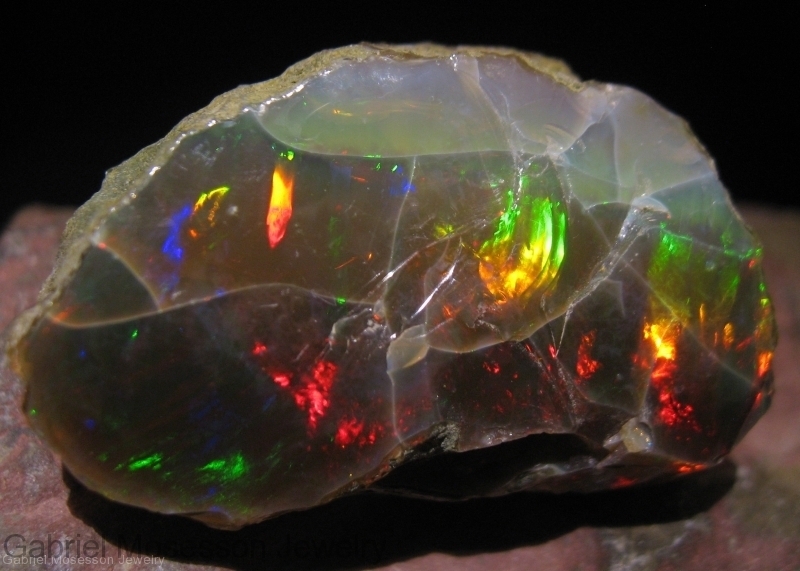
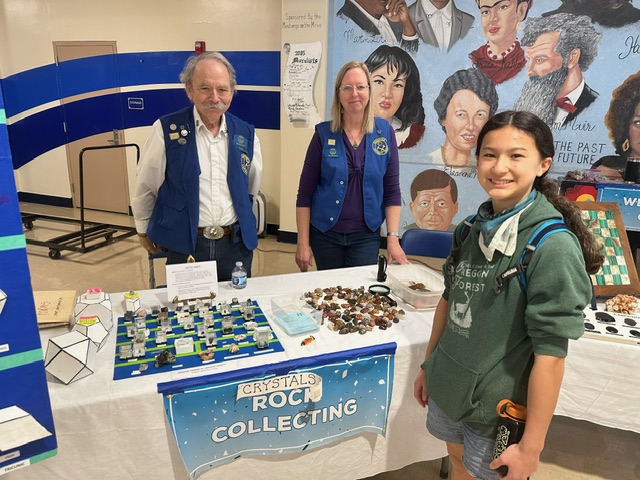
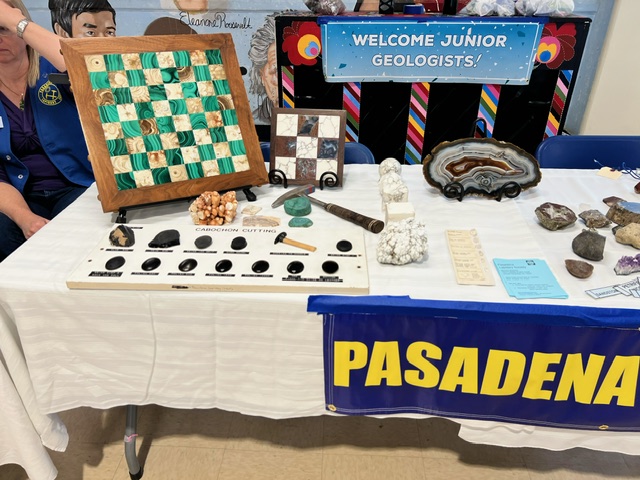
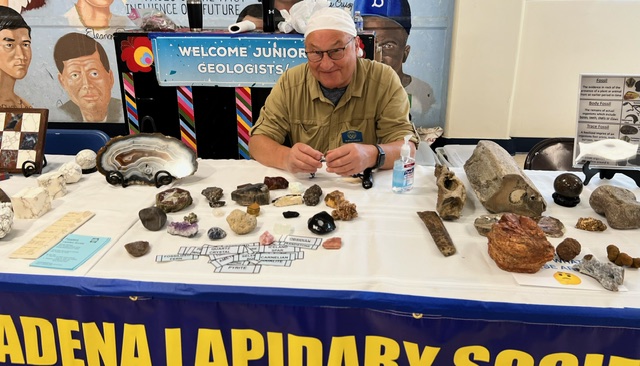
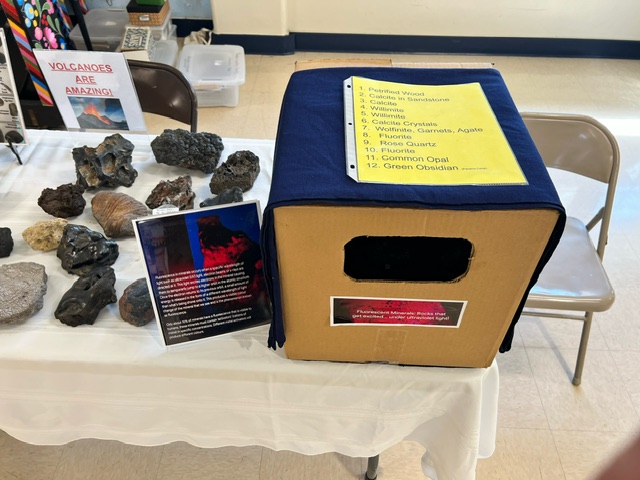
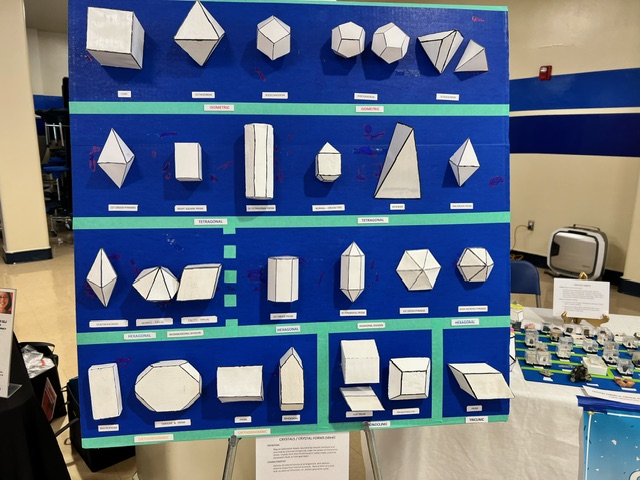
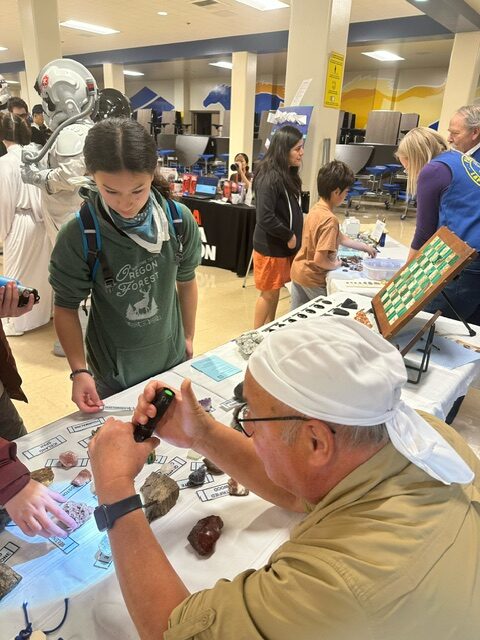
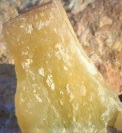
Pasadena Lapidary Society member and vice president, Barna Laszlo, will explain how some rocks can seem as though they’re one color, yet make themselves another color — namely, blue. He will start with physics, then go on to precious opal, which breaks up white light into its components, then you will see a few more stones using this trick to show blue. The next group has one member, Fluorite, which emits blue light when irradiated with UV light. The last and largest group are stones which absorb some components of white light reflecting the rest as color. Lapis Lazuli, blue Apatite and many others belong here.
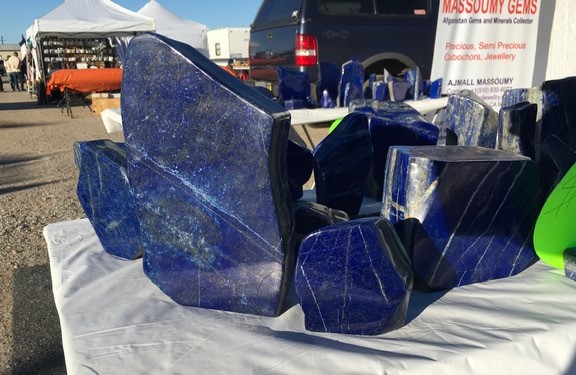
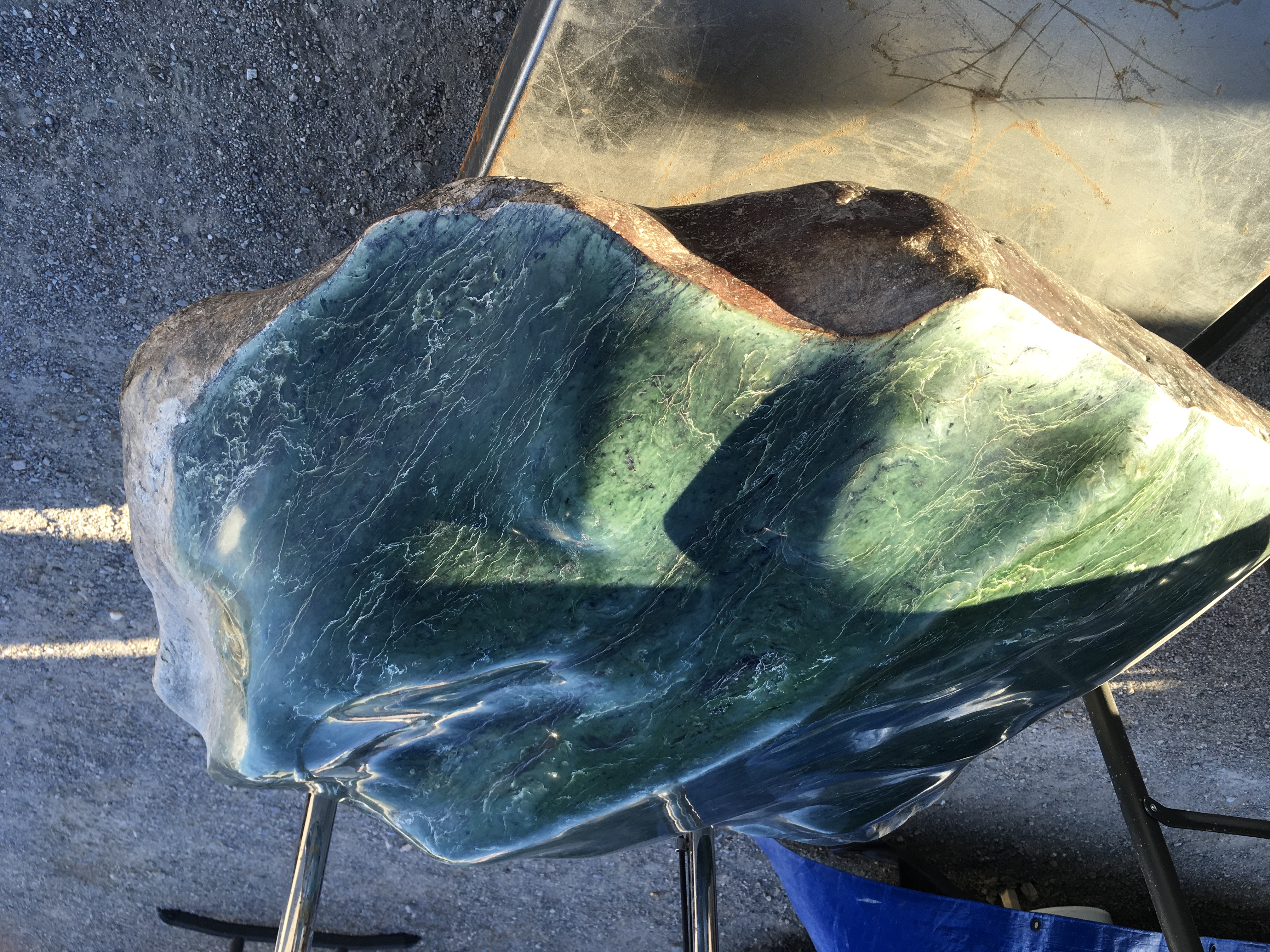
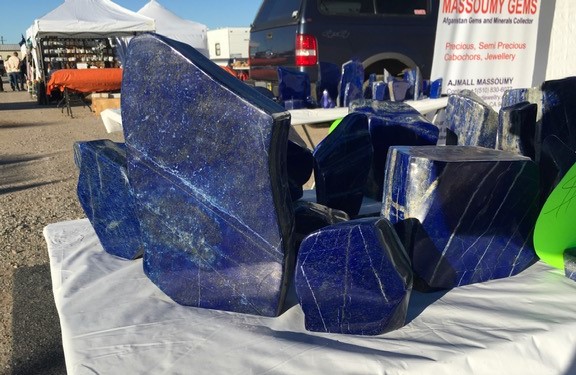
Huge chunks of Lapis Lazuli on display in vendor booth during QIA PowWow. Photo taken by PLS member Elizabeth Weston.
This program meeting takes place on Tuesday, October 20, 2026 at 7:00 p.m. in the Fellowship Hall of The Santa Anita Church, 226 W. Colorado Blvd., Arcadia, CA 91007.
Come join us! Admission is free; open to the public. Enjoy refreshments while checking out the display table; bring a rock specimen you’d like identified. Take a chance at winning a cool rock, slab or related items by buying a raffle ticket. See you there!
Death Valley National Park stands as one of Earth’s most extreme environments. Famously known as the hottest place on the planet, this vast desert landscape also holds the distinction of being the driest and lowest elevation point in North America. Yet among all its superlatives and harsh conditions, Death Valley harbors a phenomenon that has captivated scientists, visitors, and mystery enthusiasts for over a century: rocks that appear to move across the desert floor entirely on their own.
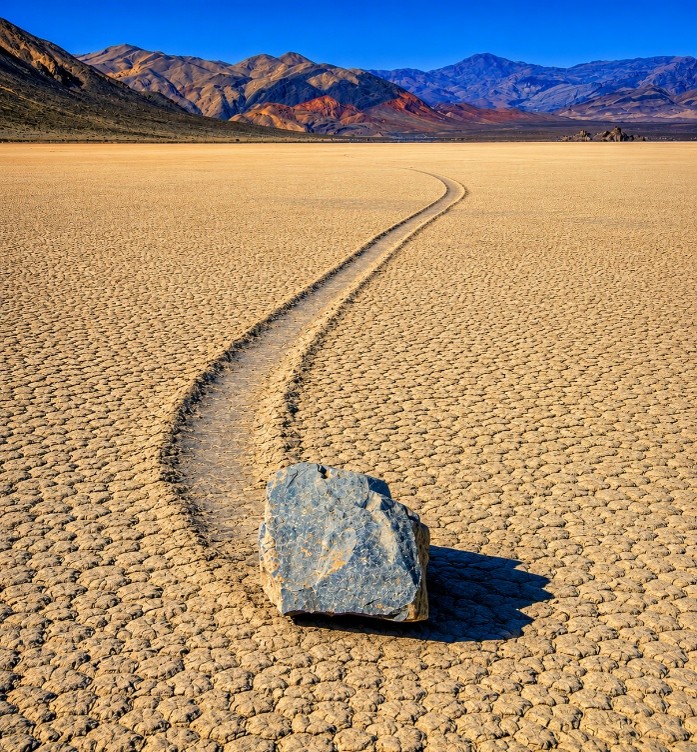
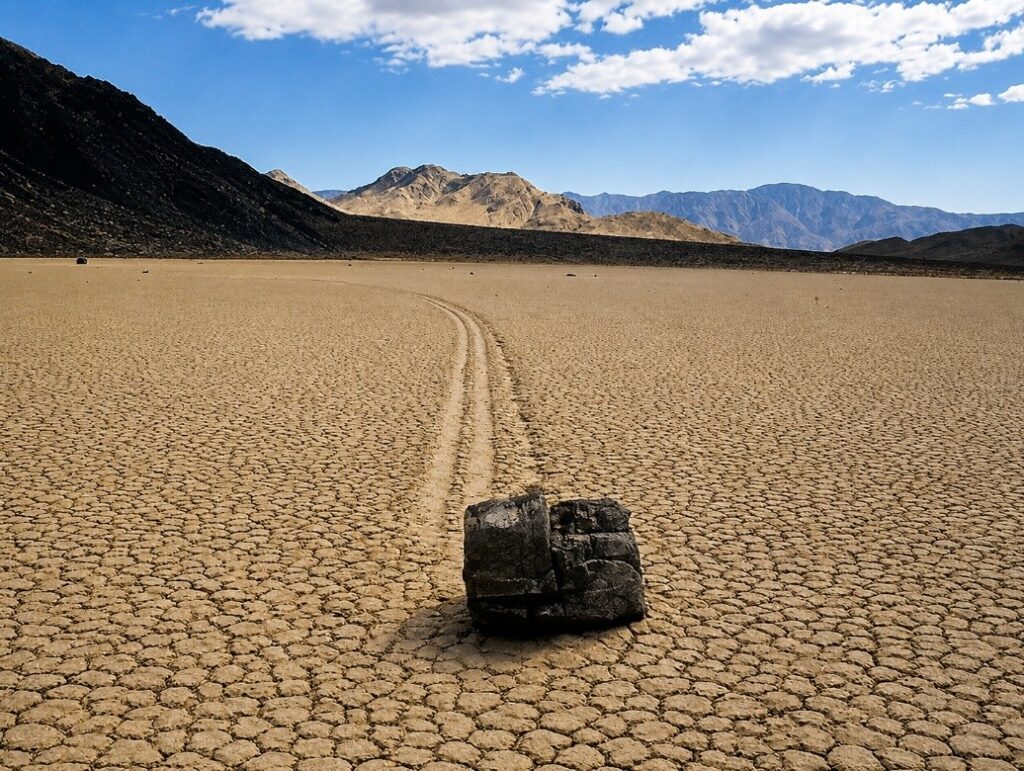
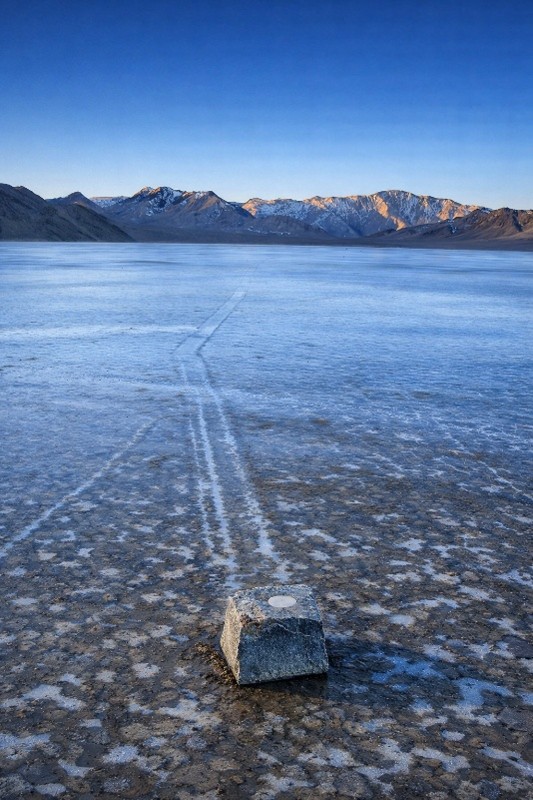
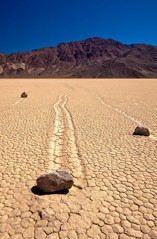
Located within the park’s remote interior lies Racetrack Playa, a perfectly flat dry lakebed where hundreds of stones—some weighing as much as 320 kilograms (700 pounds)— have left long trails across the cracked surface, clear evidence of their mysterious journeys. These “sailing stones” or “sliding stones” have puzzled observers since the early 1900s, spawning theories ranging from hurricane-force winds and magnetic fields to the more fanciful explanations involving pranksters and even extraterrestrial intervention.
For decades, no one had ever witnessed these rocks actually moving. The stones might sit motionless for years, only to suddenly relocate, leaving behind trails that could stretch for hundreds of meters—sometimes in synchronized patterns that suggested multiple rocks moved together under the same conditions. The mystery seemed destined to remain unsolved, a geological enigma that defied explanation despite numerous scientific investigations.
That changed in 2014 when a team of patient researchers finally captured the movement on camera and solved the puzzle once and for all. The answer, as it turned out, involved a rare and delicate combination of conditions that occur only briefly during certain winter periods—a perfect storm of water, ice, and wind that transforms the static desert landscape into a slow-motion ice rink capable of pushing massive boulders across its surface.
The Strange Landscape of Racetrack Playa
Racetrack Playa sits on the border region of California and Nevada within Death Valley National Park, which was designated in 1933. The playa itself is a dry lakebed, a geological feature common in desert environments where water occasionally collects but quickly evaporates, leaving behind a flat, hard surface composed of fine sediments. The surface of Racetrack Playa is remarkably level and consists of cracked mud that forms intricate polygonal patterns during the dry season.
The rocks that populate this landscape are composed primarily of dolomite and syenite, the same materials that make up the surrounding mountains. These stones didn’t originate on the playa floor; instead, they tumbled down from the adjacent slopes due to erosion, coming to rest on the parched ground below. Once they reach the level surface of the playa, something remarkable happens—they somehow move horizontally across the flat terrain, leaving perfect tracks behind them that record their paths like signatures written in stone and mud.
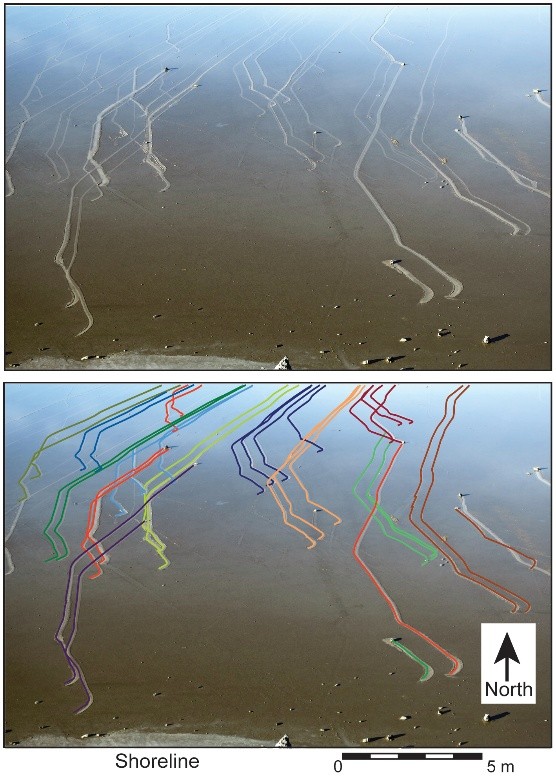
The trails themselves tell fascinating stories. Many of the largest rocks have left behind tracks as long as 1,500 feet (457 meters), suggesting they’ve traveled considerable distances from their original resting places. The character of these trails varies based on the rocks’ physical properties: stones with rough-bottomed surfaces tend to leave straight tracks, while smooth-bottomed rocks wander and curve, creating sinuous paths across the playa. Sometimes the trails run parallel to one another, indicating that multiple stones moved simultaneously under identical conditions.
The surface of Racetrack Playa is extremely fragile, and the National Park Service has implemented strict regulations to protect this unique geological feature. Driving on the playa or anywhere off established roads is strictly prohibited. Visitors are instructed not to move or remove any rocks and to avoid walking in muddy areas when the playa is wet, as footprints can remain visible for years and damage the delicate surface.
A Century of Theories and Speculation
The sailing stones have been observed and studied since the early 1900s, and over the decades, scientists and laypeople alike have proposed numerous theories to explain their mysterious movements. The most common early explanation suggested that strong winds pushed the stones across the slick surface. Death Valley is indeed known for powerful winds, and this theory seemed plausible—except that calculations showed even hurricane-force winds wouldn’t be sufficient to move some of the heavier rocks, particularly from a stationary position.
Other theories invoked magnetic fields, suggesting that some unusual electromagnetic property of the rocks or the playa surface might be responsible for the movement. This explanation gained little traction among serious scientists but captured the imagination of those drawn to more unconventional ideas.
Some observers blamed pranksters, theorizing that people were physically moving the rocks as an elaborate hoax. However, the remote location of Racetrack Playa, the sheer weight of many stones, and the fact that movements occurred without any human tracks nearby made this explanation unlikely.
And then, of course, there were the alien theories. As is often the case with unexplained phenomena, some enthusiasts suggested extraterrestrial involvement, though this remained firmly in the realm of speculation rather than scientific inquiry.
More scientifically grounded theories emerged over time. Some researchers proposed that a film of algae might create a slippery surface that allowed rocks to slide more easily. Others suggested that the combination of rain and clay created a muddy, frictionless layer. Still others theorized about ice formation, though the exact mechanism remained unclear.
Despite all these theories, one fundamental problem remained: no one had ever actually witnessed the rocks moving. The stones might sit in one position for years, then suddenly appear in a new location with a fresh trail behind them. This made it extraordinarily difficult to test hypotheses or gather direct observational evidence. The sailing stones kept their secret, moving only when no one was .
The Breakthrough: A “Boring” Experiment That Wasn’t
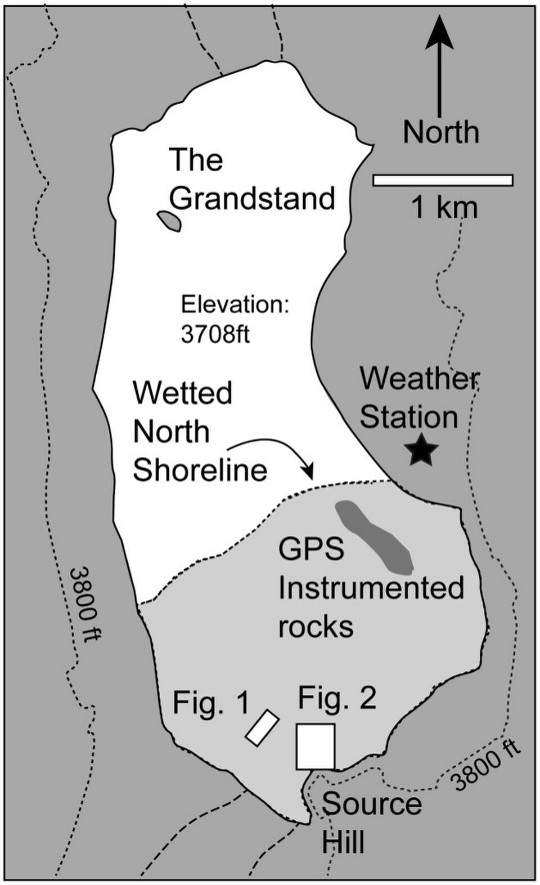
In 2011, a group of researchers decided to take a new approach to solving the mystery. Led by paleobiologist Richard Norris of the Scripps Institution of Oceanography, and including Johns Hopkins University physicist Dr. Ralph Lorenz among others, the team received permission from the National Park Service to conduct an unprecedented experiment. They attached GPS units with motion sensors to 15 rocks of various sizes and placed them strategically across Racetrack Playa, along with a high-resolution weather station to monitor conditions.
Dr. Lorenz famously called it “the most boring experiment ever.” The researchers weren’t particularly optimistic about witnessing the rocks actually move—after all, they were only the latest in a long line of scientists who had attempted to solve the mystery, and none of their predecessors had succeeded in observing the phenomenon directly. The plan was simply to monitor the rocks remotely and hope that the GPS data might provide some clues about when and under what conditions the movements occurred.
The team settled in for what they expected would be a long wait. The rocks might not move for years, and even if they did, the researchers would likely only discover it after the fact by reviewing the GPS data. They prepared themselves for patience and low expectations.
Then, in December 2013, something extraordinary happened. Richard Norris and his cousin James M. Norris traveled to Racetrack Playa to check on their time-lapse cameras and equipment. What they encountered was beyond their wildest expectations—they were about to become the first people in recorded history to actually witness the sailing stones in motion.
Witnessing the Impossible
As the Norris cousins approached the playa that December day, they heard an unusual sound—a “pop-pop-crackle” echoing across the landscape. Richard Norris immediately recognized the significance: “This is it,” he told his cousin. Before their eyes, approximately 60 rocks began to slowly sail across the desert floor, leaving fresh trails in their wake.
The movement was not dramatic or fast-paced. As Richard Norris later noted with characteristic understatement, “A baby can get going a lot faster than your average rock.” The stones crept along at a glacial pace, pushed by forces that were now finally visible and understandable. The researchers watched in amazement as the century-old mystery unfolded before them, their cameras capturing every moment.
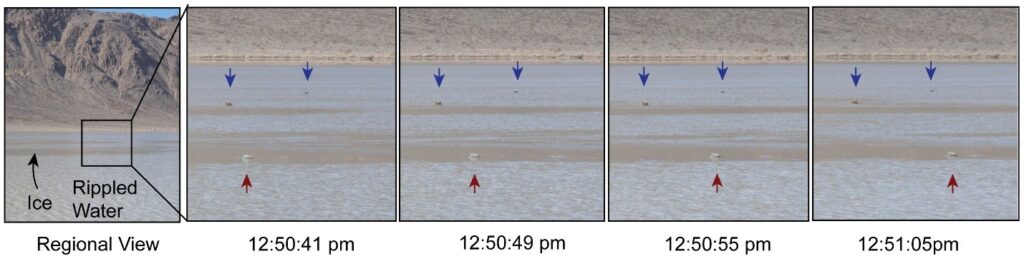
The conditions that day were perfect for revealing the mechanism. A shallow pond of water had formed on the playa from recent rainfall—a rare occurrence in a place where annual precipitation averages only about two inches. Overnight, temperatures had dropped below freezing, causing a thin layer of ice to form across the water’s surface. As the sun rose and temperatures climbed, the ice began to melt and break apart into large floating panels, some only a few millimeters thick.
Light winds—nothing approaching the hurricane forces that earlier theories had required— began to push these thin ice sheets across the water’s surface. As the ice panels moved, they accumulated behind the rocks, slowly but steadily pushing them forward. The rocks weren’t sliding across dry ground or being blown by wind alone; they were being nudged along by what the researchers would later term “ice shove.”
The Science Behind the Sailing Stones
The findings, published in August 2014, provided a comprehensive explanation for the sailing stone phenomenon. The movement requires a rare and specific combination of conditions that occur only occasionally during Death Valley’s winter months:
First, there must be sufficient rainfall to create a shallow pond on the playa surface typically just a few inches deep. This alone is unusual in one of Earth’s driest locations.
Second, nighttime temperatures must drop low enough to freeze this water into a thin sheet of ice across the pond’s surface. The ice needs to be thick enough to maintain structural integrity but thin enough to be moved by light winds—typically only a few millimeters thick.
Third, daytime temperatures must rise enough to begin melting the ice and reducing its thickness, but not so quickly that it completely melts before the process can occur.
Fourth, light winds must be present to push the floating ice panels. Interestingly, the winds required are much gentler than previously theorized—the ice provides the surface area and the water reduces friction, allowing relatively modest breezes to generate movement.
When all these conditions align, the ice breaks into large floating panels that drift across the shallow pond. When these panels encounter rocks protruding through the ice, they push against them, slowly moving the stones across the slippery, wet clay surface beneath. The rocks leave trails in the soft mud, which then harden as the water evaporates and the playa dries out, preserving a record of their journey.
As paleobiologist James Norris observed, “I’m amazed by the irony of it all. In a place where rainfall averages two inches a year, rocks are being shoved around by mechanisms typically seen in arctic climes.” The sailing stones of Death Valley move by the same ice-driven processes that occur in polar regions, yet they do so in one of the hottest places on Earth.
The research also explained why the rocks move so rarely and why no one had witnessed it before. Scientists estimate that the conditions are right for rock movement only a few minutes out of every million—an extraordinarily rare occurrence that requires perfect timing and luck to observe. The Norris cousins happened to be in exactly the right place at exactly the right time, witnessing an event that might not occur again for years or even decades.
Visiting the Sailing Stones Today
For those inspired to see this natural wonder firsthand, Racetrack Playa remains accessible to visitors, though reaching it requires preparation and the right vehicle. The playa is located in a remote part of Death Valley National Park, approximately 3.5 hours by car from the main visitor center. The road is rough and unpaved, requiring a high-clearance vehicle, with four-wheel drive strongly recommended.
The best time to visit is during spring or fall when temperatures are most comfortable for exploring. Summer temperatures in Death Valley regularly exceed 120°F (49°C), making outdoor activities dangerous, while winter brings the cold conditions necessary for rock movement but can make the road impassable.
While visitors are unlikely to witness the rocks actually moving—remember, the conditions occur only rarely—the trails left behind are visible year round and offer a tangible connection to this remarkable phenomenon. Walking among the stones and their tracks provides a sense of the mystery that captivated observers for over a century and the elegant solution that finally explained it. For those unable to make the journey to Racetrack Playa, an alternative exists. The Bonnie Claire Playa, located east of Scotty’s Castle with its south shore running along the north side of Highway 72, offers more accessible viewing of sliding stone tracks. This playa is believed to experience the same rock moving conditions as Racetrack Playa and is administered by the Bureau of Land Management rather than the National Park Service, making it somewhat easier to visit.
Regardless of which location you choose, it’s crucial to remember that these playas are fragile environments. The tracks left by the sailing stones can persist for years, but so can damage from careless visitors. Following Leave No Trace principles and adhering to all posted regulations helps preserve these unique geological features for future generations.
Conclusion: Mystery Solved, Wonder Remains
The sailing stones of Death Valley represent a perfect example of how scientific persistence and a bit of luck can solve even the most enduring natural mysteries. For over a century, these rocks kept their secret, moving only when no one was watching, leaving behind tantalizing evidence but no witnesses. Theories proliferated, ranging from the plausible to the fantastical, but none could be definitively proven without direct observation. The 2014 breakthrough came not from revolutionary new technology or complex theoretical models, but from patient observation and being in the right place at the right time. The Norris cousins and their colleagues set up their “boring experiment” with modest expectations, yet they succeeded where generations of researchers had failed, finally witnessing and documenting the phenomenon that had eluded explanation for so long.
The solution—thin ice sheets driven by light winds across a shallow winter pond—is both simpler and more elegant than many of the proposed theories. It requires no hurricane- force winds, no magnetic anomalies, no aliens, and no pranksters. Instead, it demonstrates how rare combinations of ordinary natural processes can create extraordinary results.
Yet even with the mystery solved, the sailing stones retain their power to inspire wonder. Knowing how they move doesn’t diminish the remarkable nature of the phenomenon—if anything, understanding the precise and rare conditions required makes it even more special. These rocks move perhaps a few minutes out of every million, driven by a delicate balance of water, ice, and wind that occurs only when Death Valley’s extreme environment briefly mimics arctic conditions.
The sailing stones remind us that Earth still holds mysteries worth investigating and that patient, careful observation remains one of science’s most powerful tools. They also demonstrate that some of nature’s most spectacular phenomena occur not through dramatic, violent forces, but through subtle, temporary alignments of conditions that require both scientific rigor and serendipity to witness and understand.
For visitors to Death Valley, the sailing stones offer something increasingly rare in our modern world: a genuine natural mystery that has been solved within living memory, yet remains wondrous to contemplate. Standing on Racetrack Playa, surrounded by rocks and their trails, you’re witnessing the same scene that puzzled observers for over a century but now, you understand the elegant mechanism behind it. The rocks may be still when you visit, but their tracks tell the story of those rare winter days when ice, water, and wind conspire to set stones sailing across the desert floor.
Pasadena Lapidary Society members will be attending our Christmas Party in lieu of a program meeting for December. We wish you all a wonderful Holiday Season and a very Happy 2026! Stay tuned for information on our January program meeting, which will be held Tuesday, January 20, 2026.
The July 2025 Pasadena Lapidary Society meeting will be closed to non-members this month as we celebrate the Summer, another year’s anniversary, and confer over our annual Gem and Mineral show coming in September.
The August meeting will be business as usual and open to visitors. Stay tuned for program information for the August 19th meeting.
Pasadena Lapidary Society members will be gathering for our annual Christmas Party on Saturday, June 16 from 4-9 pm. Members can contact Mona Ross for info regarding what potluck item to bring, the location of this festive event, and other questions one might have. Mona needs a headcount as to who’s coming, since space at the venue is limited. Please refer to your monthly newsletter or member roster for her contact info.
Future Rockhounding in the vicinity of the Mojave Trails National Monument (MTNM) is being threatened. For those who’ve enjoyed collecting at Lavic Siding, the Cady Mountains, Afton Canyon and surrounding areas, upcoming legislation could impact our beloved hobby. If you want your voice heard and your opinion counted, please register for and participate in these upcoming Bureau of Land Management (BLM) meetings. The first one will be virtual and the other three will be held in person.
Virtual Meeting is one week from today.
Sign up now at the link below. Rockhounds please share this to get the info out. It is important we get involved!!!
Members of Pasadena Lapidary Society, along with most serious rockhounds, wait anxiously all year to make the 3-1/2 hour trek to Quartzsite, AZ in January. Some stay there into February, camping nearby in order to go rockhounding at their leisure, and others check in to the few motels in town or travel the 22 miles back/forth to Blythe, CA for lodging.
Some sizable chunks of beautiful Lapis Lazuli, at vendor booth of a past year’s QIA PowWow in Quartzsite.
One of the biggest draws in Quartzsite is the QIA POWWOW, always held the third week in January. This year the POWWOW runs from January 18-22. If you’ve never been, the POWWOW is like a huge swap meet focused on gems, minerals, rocks and everything related. Admission is free and so is parking.
Self-professed as “The Rock Capital of the World”, Quartzsite is a town in La Paz County of +/- 2,000 inhabitants that swells to a couple of million in January and February each year. Situated 125 miles west of Phoenix at the junction of Interstate 10 and U.S. Highway 95, it enjoys a close association with the Colorado River, just 18 miles to the west.
Pictures provided by PLS member Christian Schulze.
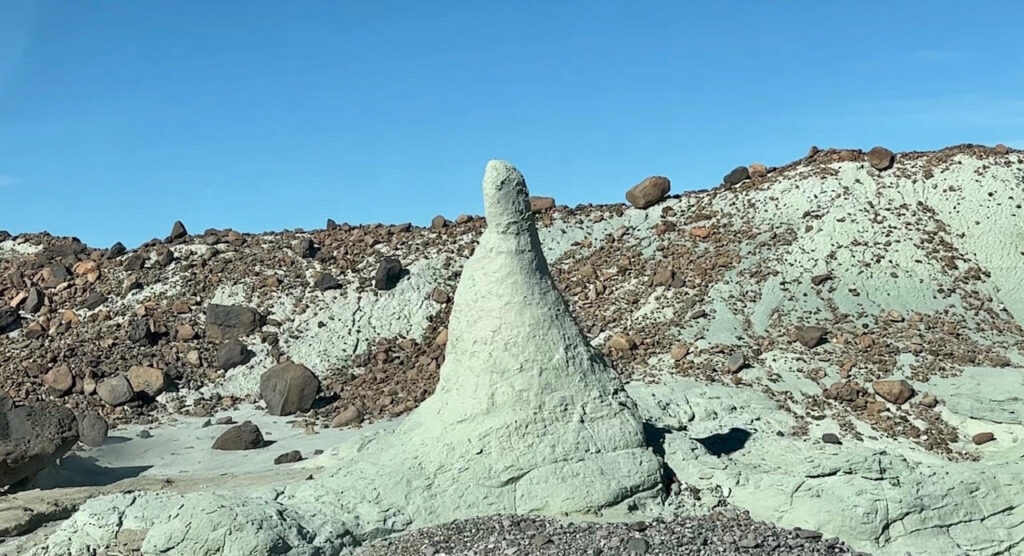
Mound formation we drove past on our way to one of the collection sights. It was nearly as tall as a Jeep!
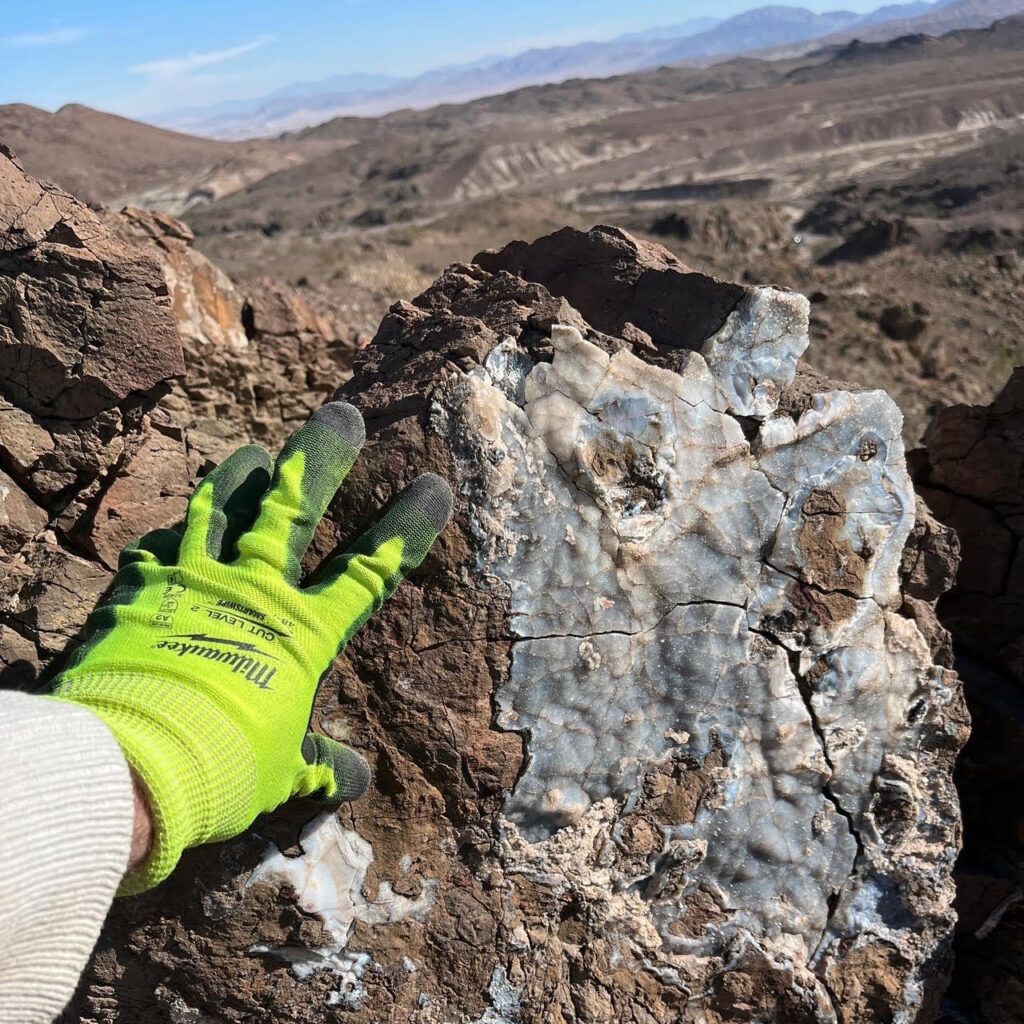
A large rock we stumbled upon during a group hike with some kind of chalcedony/druzy mineral on the surface.
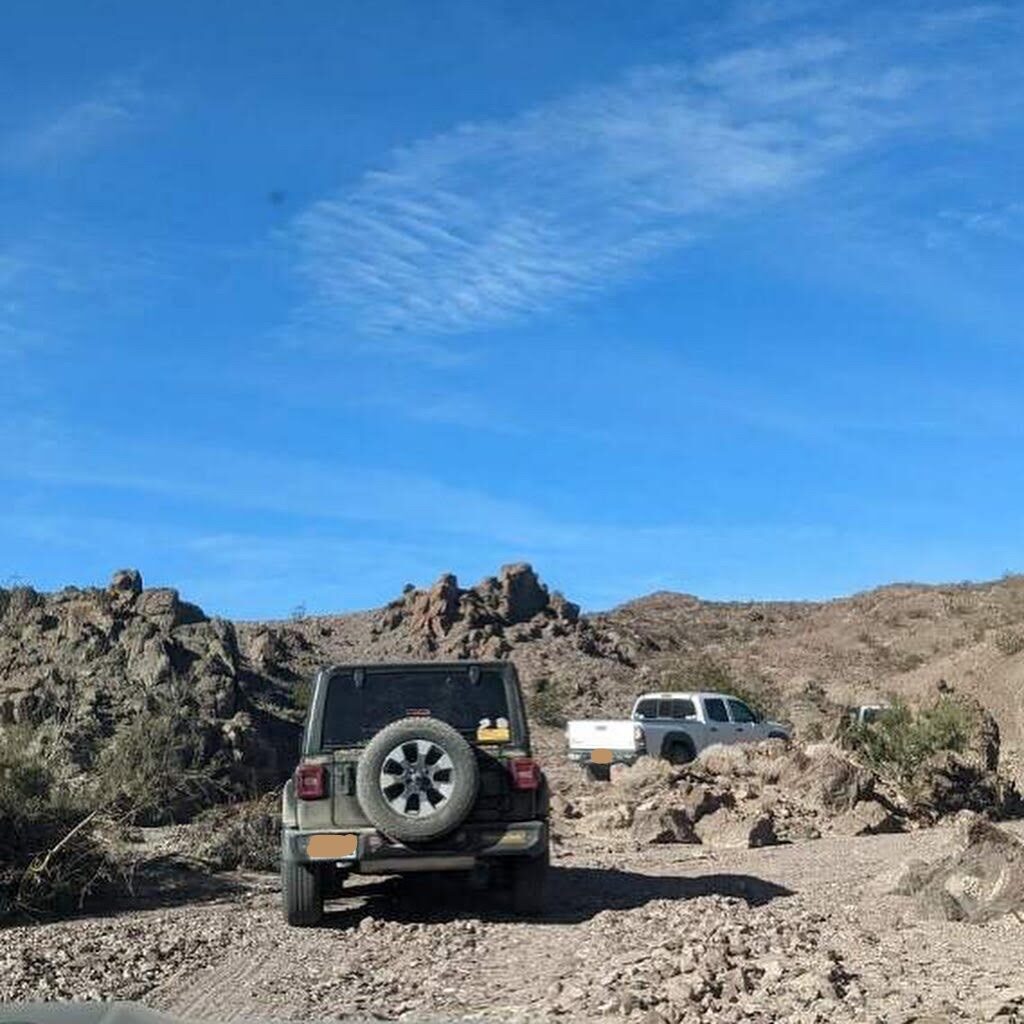
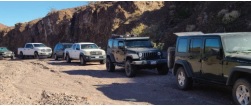
The Caravan led by trip leaders on our way through the desert to some collection spots.
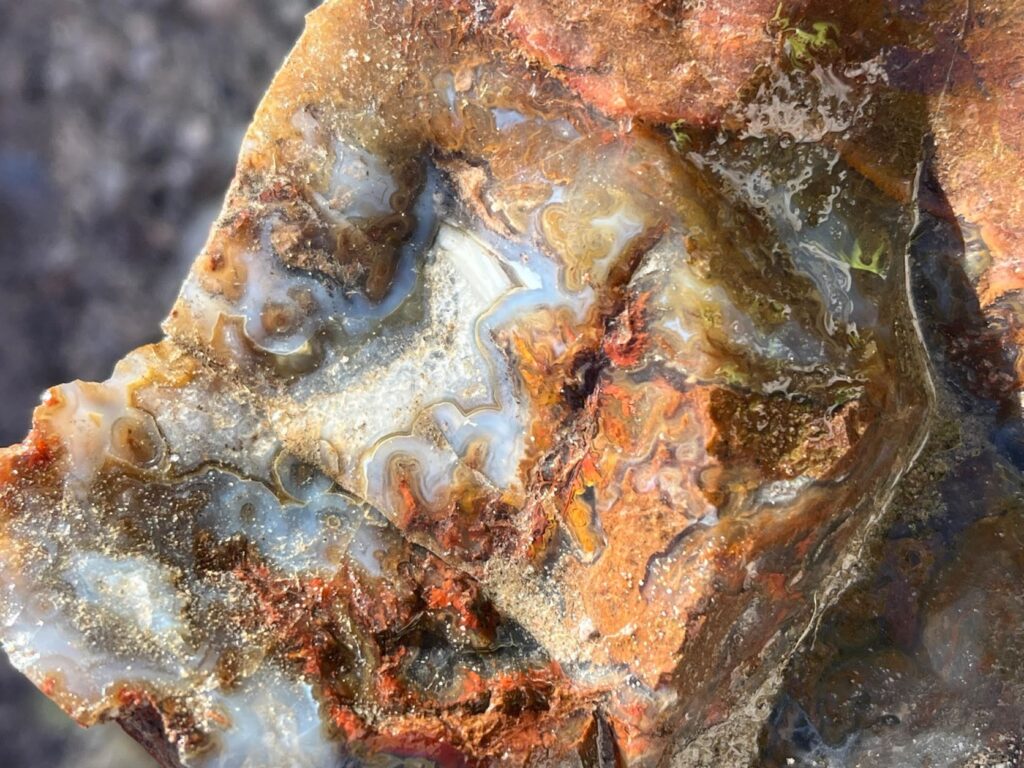
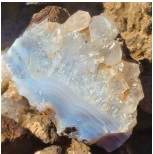
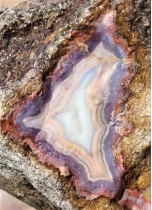
An example of some agate found.
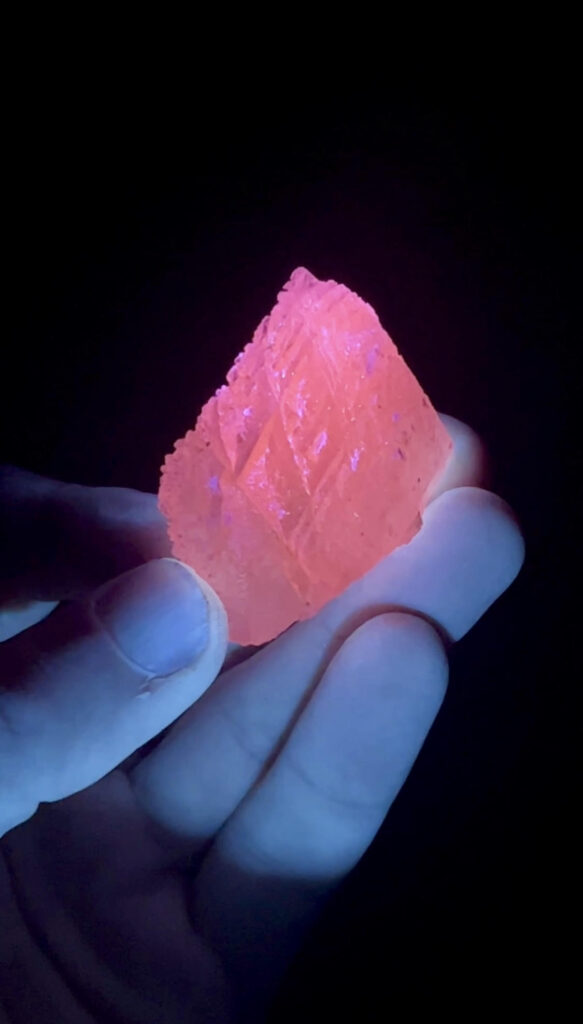
Calcite found both days exhibiting a pink fluorescence under a longwave UV light at night.
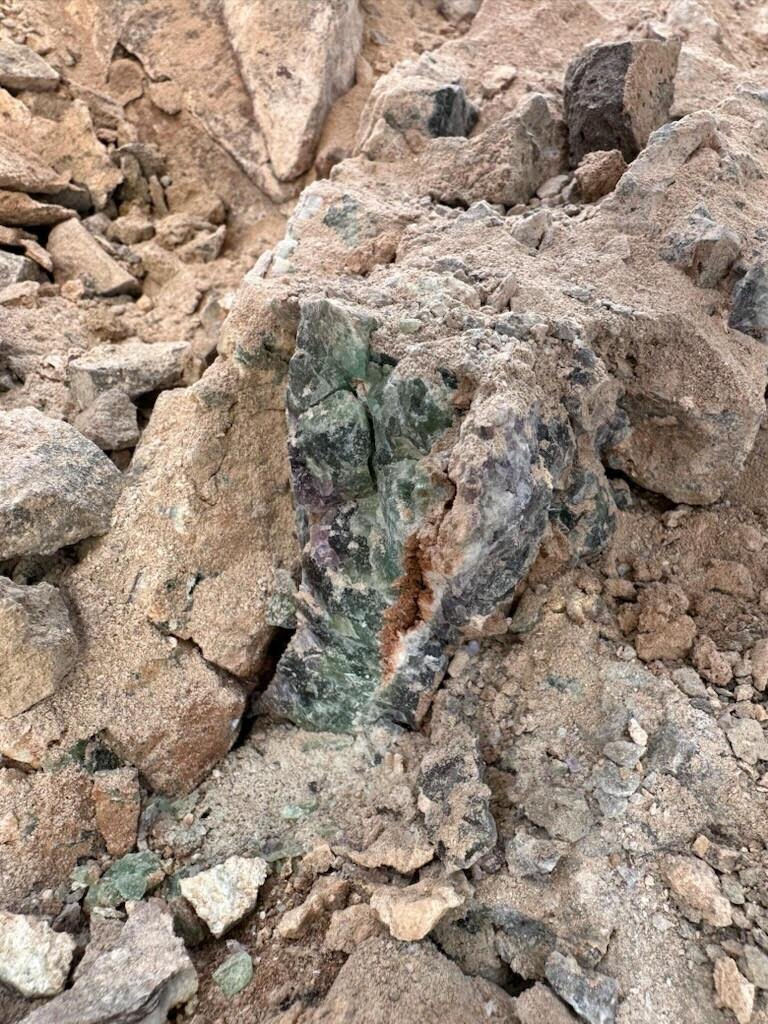
Green and Purple fluorite we uncovered on fieldtrip.
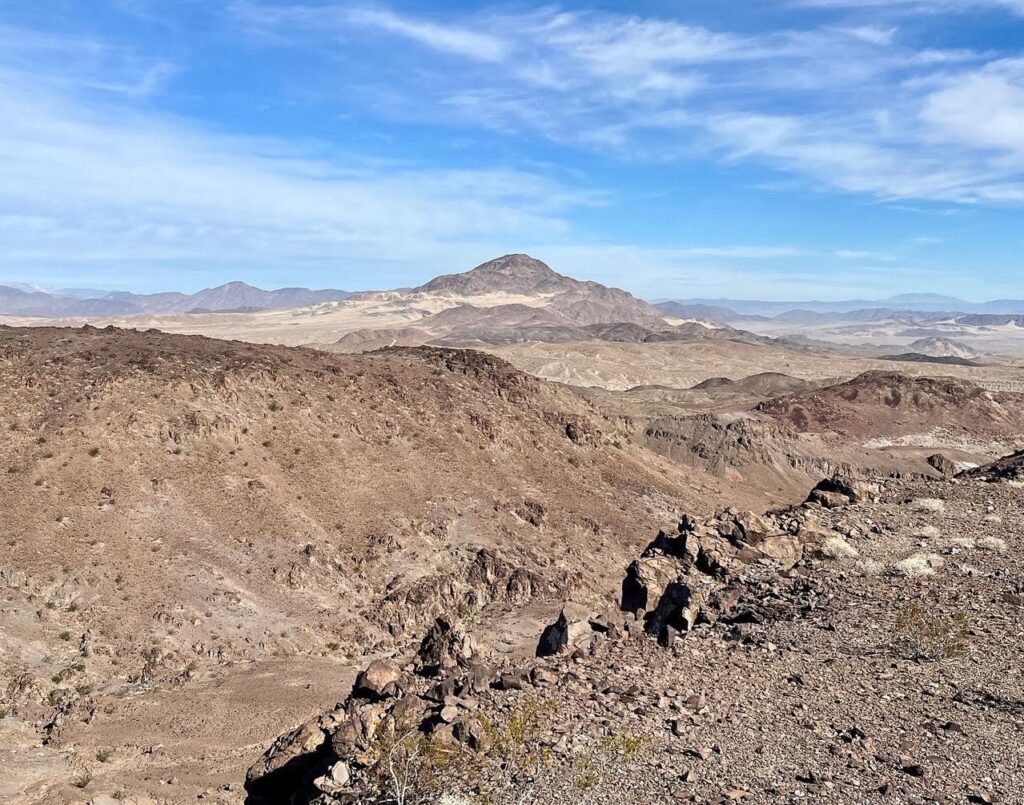
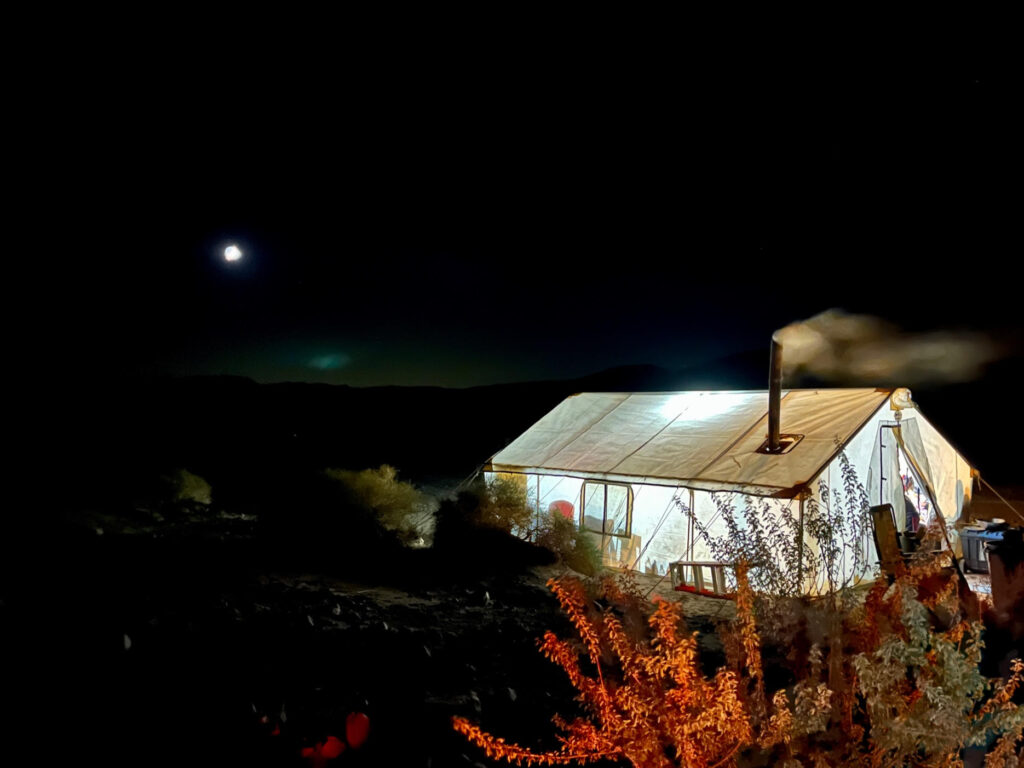
Shot of the beautiful landscape we encountered during the field trip.Base Camp on a chilly night.
Baxter Wash: 5AM November 25, 2022
Fieldtrip Report and Pictures by PLS member Rex Nishimura
The nighttime rumble of the slow moving Union Pacific freight train awakened me from my post-Thanksgiving slumber. It was a big concern as we had parked next to some desolate tracks in Afton Canyon, deep in the Mojave Desert. How far away was the train? Where was it going? After a moment of confusion, I zeroed in on its location, several miles away, but the reverberation of 6 diesel tractors and the wail of its horn gave me a sense of urgency. Like the train, it was time for us to get moving on our next adventure, rockhunting in Baxter Wash.
Baxter Wash is only about 2 miles from Afton Canyon, but it has changed significantly since last year. Heavy monsoonal rains washed away roads, replacing them with ravines of rock and sand. The campsite was a mess of boulders and rocks in the wrong places. We would have our work cut out for us to make camp before our old, new, and future rockhound friends would arrive.
Caravan vehicles traversing through a narrow canyon.
There’s little cell service out there, so after we set up the camp, we climbed a nearby hill searching for a signal. Here, 200 feet above camp, we got enough signal to send and receive texts and watch our friend drive into camp from several miles away. It’s a testament to the skill of our drivers, that no one got lost driving 5 miles on dirt roads to the hidden base camp. People came and went during the weekend, but we averaged about 17 campers over the 3 days. A potpourri of vehicles made it to camp too, from full size pickups to a tiny SUV Subaru Outback. Some were trail ready, but less capable vehicles were left behind.
Though there are many trail ready and highly capable vehicles in this world, getting to productive gem fields requires extra effort. Knowledgeable, skilled, and diligent drivers are needed to negotiate the rocky canyons and sandy washes. Our first stop was the crystal agate seams about 10 miles away, in a narrow canyon pitted with sheer walls, boulders, and rocks. One of our awesome junior members volunteered to be the rock spotter. Her job was to keep the vehicles from getting high centered or scraping on sharp rocks.
Crystal agate seam
The crystal agate seam required hiking up a sandy hill for beautiful light blue, 2” seam agate with a clear quartz crystal center. It’s beautiful material, but since it took 40 minutes to drive here, we only had about 30 minutes to collect before heading to our next location, the miner’s cave and the nearby yellow fluorite mine.
Visiting abandoned miner’s cave
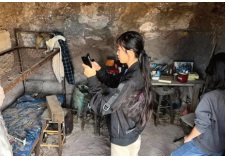
Years ago, some poor miner hewed a cave out of volcanic ash, stocking it with everything needed for a prospector’s life. All that’s left now is a rusty bed frame, a Coleman stove, shelves stocked with cans of food, a small library of books (including a Bible), and a few dollars sitting under a rock. I’m not sure I would eat from the old cans of food, but I could find a use for the bed frame, books, and Bible! Money is kind of useless out there too. I thought about adding a few dollars of my own, but I didn’t want the camp to be plundered by offroad pirates. Maybe someday, I’ll camp in the cave and see what prospecting was really like.
Yellow fluorite specimen
The yellow fluorite mine is peculiar only because of the color. White, purple, and green are common colors, but yellow is rare in the Cady Mountains. We picked up some yellow to add to our collections.
Back at camp that night, we had a slight problem with the potluck. Forks. Even though we were short on forks, rockhounds are a resourceful people.
In no time, we had split our mahogany firewood into strips and whittled them into mahogany chopsticks. No splinters either! We enjoyed a wonderful meal of spaghetti and meatballs with lots of pie and whipped cream! After supper, we discovered that one of our members’ car wouldn’t start. We’re not sure what the problem was, but by pooling our resources, we found someone with a battery charger and 3 hours later, his car was working like normal. A family of motorcycle enthusiasts even dropped by our campsite to inquire about purchasing some fuel from us. We sold it to them at cost, even though at that particular moment, the motorcyclist’s needs made the gas worth much more. Scarcity and value is key to any item’s worth.
Agate
People often ask me how I know where to look for the gemstones. Well, I don’t actually search for gemstones as they are too hard to find. I search for adventure which is ubiquitous. The next day we were in for an adventure. A grueling 3 mile hike for red and blue jasper agate. After scrambling up a hillside of loose gravel, we hiked along the ridge for jasper agate, plus red and white calcite crystals, agate nodules, and some pre-sagenite clusters. The sagenite was a bit of a stretch, but we found needle-like crystalline agate in a splayed pattern. I heard one of our new members declare that the hike was an adventure, which describes perfectly how I feel about prospecting for our club.
Sunday’s trip was to the Green Hills. Here the roads were in bad shape and we struggled to find and remain on previously marked paths. No one had visited this area for a long time, and there was plenty of high quality agate almost everywhere. Most of it was banded white or clear, but we also found green moss agate and a hillside of marble sized amygdules. The kids had fun playing knuckles down with the agate balls, but the amygdules were too numerous to bother collecting.
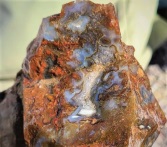
A nice chunk of agate found on fieldtrip
The rock collecting part of the trip was now over; all that remained was to break camp. I must give a shout out to all the drivers who graciously offered seats to rockhounds without vehicles. This was a tough drive and your generosity is much appreciated! I also must thank everyone for working together to make this trip possible. It’s great to be on the same team and, of course, bringing home the gemstones makes it even better.